What is Social and emotional learning (SEL)?
Practical skills that support better relationships, emotional wellbeing, responsible choices and learning.
How children feel affects how they learn.
Social and emotional learning (SEL) is the process of building skills to understand emotions, manage challenges, care for others, build positive relationships and make thoughtful choices. SEL is not a replacement for mental health treatment; it complements supportive learning environments.
We draw on CASEL’s five competencies and the importance of classrooms, schools, families and communities working together.
Skills that strengthen learning and life.
Self-awareness
Understanding feelings and strengths.
Self-management
Managing emotions and setting goals.
Social awareness
Seeing others’ perspectives with empathy.
Relationship skills
Communicating, cooperating and resolving conflict.
Responsible decisions
Making caring and constructive choices.
Evidence → Adaptation → Practice → Measurement.
Listen and assess
Understand local needs, school realities and learner strengths.
Design with evidence
Select promising practices and adapt them to language, culture and age.
Practice together
Support educators, families and children through active learning.
Evaluate and improve
Review feedback, wellbeing and learning indicators and refine delivery.
Safeguarding comes first.
Our proposed approach centres on respectful engagement, parental or caregiver consent as applicable, child assent, privacy, inclusion, referral pathways where needed and a commitment not to use identifiable children’s stories or images without permission.
Protection and recovery — Our priorities include safety, trusted relationships, non-violent caregiving, caregiver support, and appropriate referral pathways when specialist care is needed.
SEL complements, but does not replace, specialist mental-health or trauma care.
The recognized SEL cycle
This recognized SEL cycle helps explain how the five competencies connect with classrooms, schools, homes and communities. GCI uses it as a practical guide for learning, wellbeing, belonging and school success in Rwanda.
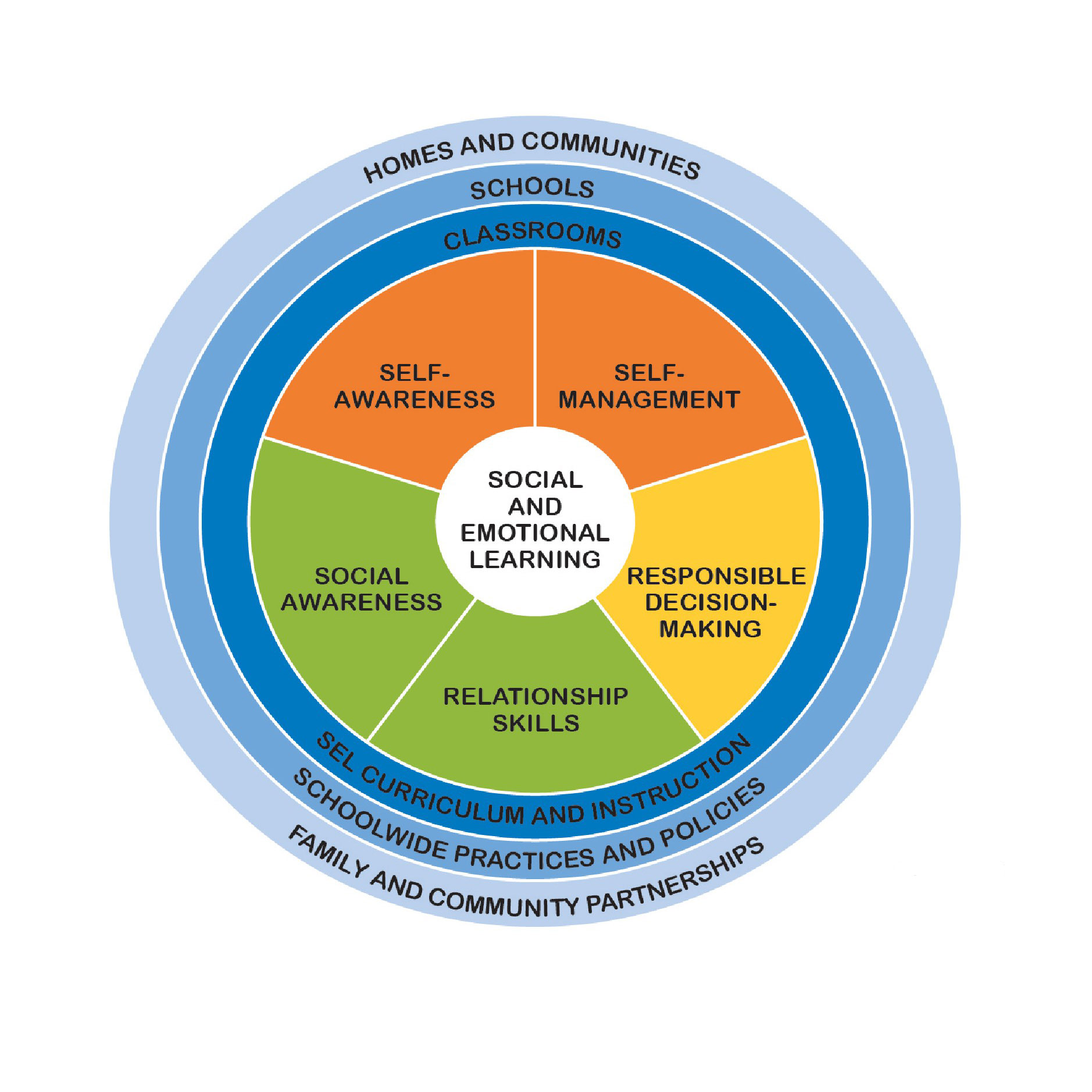
Source: CASEL, What Is SEL?.
How we use the cycle
- To plan age-appropriate activities for children and young people.
- To strengthen safe relationships between children, caregivers and educators.
- To connect classroom practice with SEL at home.
- To support prevention of early childhood trauma and promote recovery-friendly environments.
- To link wellbeing support with improved focus, participation and school performance.
The cycle is a guide, not a rigid script. GCI adapts it to the developmental stage, family context and school setting of the learner.